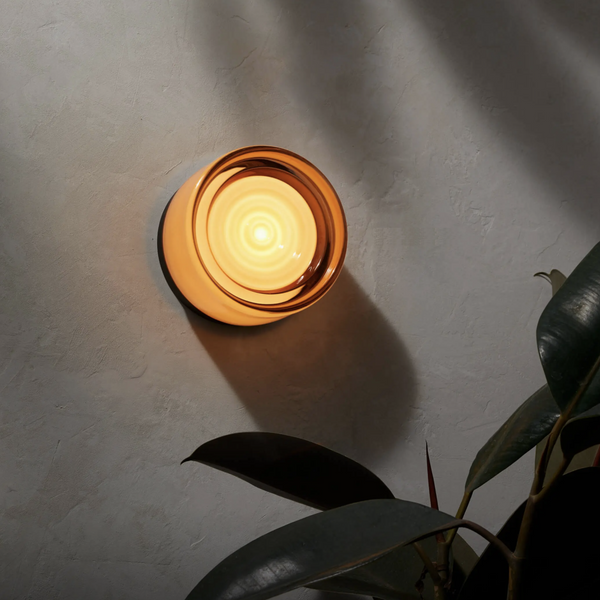
Everything you need to choose the right fixtures for every room — fixture types, room-by-room advice, sizing rules, and the brands worth your money in 2026.
Every well-lit room uses at least two types of light: ambient (general), task (focused), and accent (decorative). A single overhead fixture is never enough.
A sconce that's too small, a pendant that hangs too low — wrong sizing ruins even beautiful fixtures. We give you the exact numbers for every situation.
You don't need to spend $800 for a fixture that looks like a million. In 2026, brands like Wenche Studios close the gap between luxury looks and accessible prices.
Before buying anything, understand what each fixture type does — and which rooms they suit best.
Wall-mounted fixtures that direct light up, down, or both. Perfect for bedrooms (flanking the bed), hallways, living rooms, and bathrooms (flanking a mirror). They add depth and warmth that ceiling fixtures can't.
Best brands: Wenche Studios · Schoolhouse · Rejuvenation
Suspended from the ceiling on a cord or rod. Ideal over dining tables, kitchen islands, and entryways. Available in single or clustered configurations. The statement piece of most rooms.
Best brands: Wenche Studios · BO-HA · CB2
Freestanding fixtures that add ambient or task light without wall installation. Essential in living rooms and reading nooks. Arc floor lamps are particularly versatile for illuminating seating areas.
Best brands: Article · West Elm · IKEA
Ceiling-mounted fixtures for general room illumination. Flush mounts sit directly against the ceiling (good for low ceilings); semi-flush drop a few inches. Kitchens, hallways, and laundry rooms rely on these.
Best brands: Schoolhouse · Rejuvenation · CB2
Multi-arm ceiling fixtures designed to be a focal point. Work in dining rooms, entryways, and bedrooms with high ceilings. Scale is critical — a chandelier too small for the room looks awkward.
Best brands: Restoration Hardware · Schoolhouse · West Elm
Horizontal bar fixtures or vertical sconces flanking bathroom mirrors. Proper bathroom lighting requires even illumination on both sides of the face — single overhead lighting creates unflattering shadows.
Best brands: Rejuvenation · Schoolhouse · BO-HA
Each room has different lighting needs. Here's exactly what to use where — and what to look for.
The bedroom needs soft, dimmable ambient light plus targeted task light for reading. Avoid harsh overhead lighting — it's unflattering and disrupts sleep. Wall sconces flanking the bed are ideal: they free up nightstand space and create a hotel-like atmosphere.
Living rooms need layered lighting most of all: an ambient source (overhead or torchiere floor lamp), task light for reading (arc or floor lamp), and accent lighting (wall sconces or picture lights). Use dimmers throughout. Aim for 1,500–3,000 lumens total across all sources.
The dining room is the ideal place for a statement pendant or chandelier. Hang it 28–36 inches above the table surface. Size it proportionally: roughly half to two-thirds the width of the table. A dimmer switch is non-negotiable — dining should be flexible from bright meals to intimate evenings.
Kitchens need bright, even task lighting above work surfaces (under-cabinet lighting or recessed) plus a decorative focal point over the island. Avoid warm white over countertops where you need to see food clearly — neutral white (3000–4000K) is better here.
Bathroom lighting is often done wrong — a single overhead fixture creates harsh downward shadows. The correct approach is side-lighting: sconces or vanity bars flanking the mirror at face height (60–65 inches). This mimics makeup-counter lighting and eliminates shadows on the face.
Hallways are often overlooked but set the first impression of a home. A series of evenly spaced wall sconces is the most elegant solution — more interesting than a row of recessed lights. Entryways can anchor a pendant or small chandelier for drama on arrival.
The right amount of light — and the right color of light — makes the difference between a room that feels good and one that doesn't.
Mount wall sconces 60–65 inches from the floor — at or just above eye level. For bedside sconces, position them so the bottom of the shade is at shoulder height when seated in bed.
Hang dining pendants 28–36 inches above the table surface. For kitchen islands, slightly higher — 30–36 inches — to clear sightlines across the counter.
Use 10–20 lumens per square foot as a general rule. Living rooms need 10–15 lm/sq ft; kitchens and bathrooms need 70–80 lm/sq ft for task areas.
2700–3000K (Kelvin) gives the warm, amber-toned glow best for bedrooms, living rooms, and dining rooms. Cooler temperatures (4000K+) suit kitchens and offices.
| Room | Lumens needed | Color temp | Dimmer? | Primary fixture |
|---|---|---|---|---|
| Bedroom | 1,500–3,000 lm | 2700K warm white | Essential | Wall sconces + ceiling fixture |
| Living Room | 2,000–4,000 lm | 2700–3000K | Essential | Pendants + sconces + floor lamp |
| Dining Room | 1,500–3,000 lm | 2700–3000K | Essential | Pendant or chandelier |
| Kitchen | 5,000–10,000 lm | 3000–4000K neutral | Recommended | Recessed + pendants over island |
| Bathroom | 4,000–8,000 lm | 3000–4000K neutral | Recommended | Vanity sconces + overhead fixture |
| Hallway | 500–1,500 lm | 2700–3000K | Optional | Wall sconces or flush ceiling |
| Home Office | 3,000–6,000 lm | 4000K cool white | Recommended | Overhead + desk task light |
Editor's Pick · Best Brand 2026
After reviewing dozens of lighting brands, Wenche Studios stands out for one consistent reason: their fixtures look significantly more expensive than they are. The design language is distinctly European — clean geometry, considered proportions, premium finishes — with prices that most budgets can actually absorb.
Their wall sconces are the strongest product in the range. We tested several pieces in different settings — modern apartments, traditional homes, Scandinavian-influenced spaces — and they worked in all of them. The dimmable LED option is well-engineered, and the brushed brass and matte black finishes hold up over time.
Design Quality
4.9 / 5
Value for Money
4.8 / 5
Build Quality
4.7 / 5
Shipping & Service
4.7 / 5
The questions we get asked most often — answered honestly.
The best bedroom wall sconces are dimmable, mounted at 60–65 inches from the floor on either side of the bed. Look for sconces where the shade directs light downward or sideways rather than toward the face. Wenche Studios makes some of the best bedroom sconces at accessible price points — their brushed brass and matte black finishes work across most interior styles. Mount them 30–36 inches apart for a balanced look, and always use a warm white bulb (2700K).
Pendant lights should hang 28–36 inches above the dining table surface. For high ceilings (9 feet or more), go toward the higher end of that range — around 34–36 inches. The pendant should be sized so it's roughly half the width of the table: a 60-inch table suits a single pendant 24–30 inches in diameter, or two to three smaller pendants clustered together. Always install with a dimmer for maximum flexibility.
For modern and contemporary homes, Wenche Studios is our top recommendation for wall sconces and pendant lights — exceptional design quality at prices well below comparable luxury brands. For premium handcrafted pieces, Schoolhouse is the best alternative. For a broader range that includes furniture and decor, BO-HA offers strong Nordic-inspired lighting at very accessible prices. For budget options, Article provides good Scandinavian-influenced floor lamps and pendants.
Warm white (2700–3000K) creates a cozy, amber-toned glow — best for bedrooms, living rooms, and dining rooms. Neutral white (3500–4000K) is brighter and crisper — good for kitchens and bathrooms where you need accurate color rendering. Cool white (4000–5000K) is clinical and energizing — best reserved for home offices or task-specific areas. Most modern fixtures, including those from Wenche Studios, pair best with a 2700K bulb for living spaces.
For a bedroom, target 10–20 lumens per square foot of floor space. A 150 sq ft bedroom needs about 1,500–3,000 lumens total — but spread across multiple sources. A central ceiling fixture providing 1,000–1,500 lumens plus two bedside wall sconces at 300–500 lumens each gives you the flexibility you need. Always use dimmers so you can dial down for evenings and up for getting dressed in the morning.
Plug-in wall sconces are nearly as effective for most applications and much easier to install — no electrician required, no wall work. The main limitation is the visible cord; cord covers or cord raceways minimize this. Hardwired sconces look cleaner but require a junction box in the wall. If you're renting or want flexibility to reposition, plug-in is the better choice. Wenche Studios offers both options across their sconce collection.
Yes — Wenche Studios is one of the most consistently well-reviewed modern lighting brands we've tested. Their design quality rivals brands at 2–3x the price, and they offer free shipping and free returns on all orders, which removes the risk from buying online. The most common customer feedback is that the pieces look even better in person than in the product photos — which is rare and a strong signal of genuine quality.